
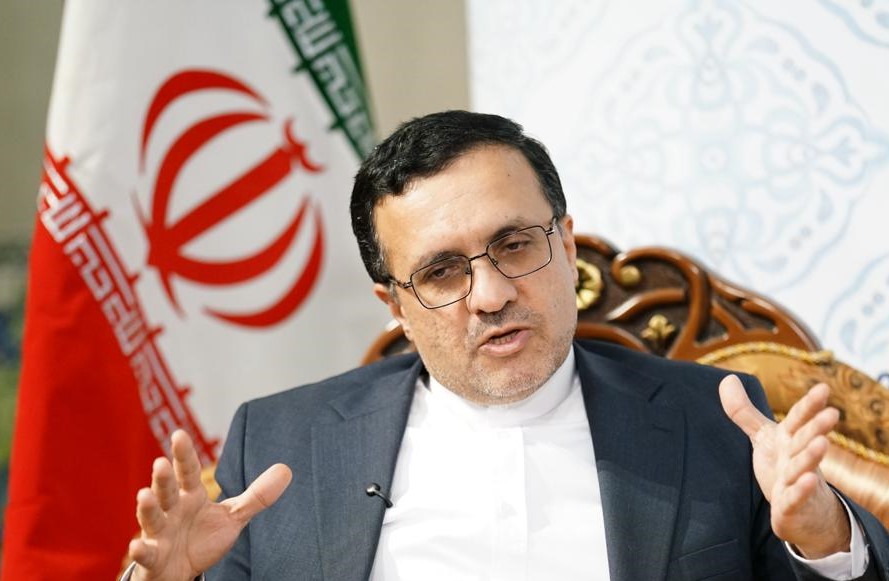
Iran considers the armies of European Union member states that have included the Revolutionary Guard Corps on the EU list of “terrorist organizations” to be “terrorist groups,” Tehran Parliament Speaker Mohammad Baqer Qalibaf said on Sunday. “By trying to strike at the Guard, which has been the biggest barrier to the spread of terrorism in Europe, the Europeans have shot themselves in the foot and, once again, by blindly obeying the Americans, they have decided against the interests of their own people,” said Mohammad Baqer Qalibaf, Speaker of the Iranian Parliament. What will be the consequences of this decision on Iran-EU relations, and Iran-Romania relations? What practical steps do you intend to take diplomatically to manage this rift? What is the danger of terrorism spreading in Europe under these circumstances?
Javad Karimi: First, the Islamic Revolutionary Guard Corps was established in accordance with the Constitution of the Islamic Republic of Iran and is a defense and sovereignty institution for Iran. The law that the European Union passed against an Iranian institution and sovereign element and declared it illegitimate is against the rules of international law. Second, in my opinion, this decision of the Council of Ministers of the European Union to put the Islamic Revolutionary Guard Corps on the terrorist list was more of a reactive decision resulting from pressure from some lobbying groups on the authorities of the member states. Also, the incorrect and misleading information of the mainstream media was effective in provoking this reaction. This decision was made in a more emotional atmosphere and was less rational and focused on examining its destructive aspects and consequences. For this reason, I think this decision was born with a handicap from the beginning and I do not think that a decision with defective genes can move from the level of slogan and symbol to the level of implementation. Since the implementation of a decision requires precise legal implementation instructions, how are European countries going to identify, list and list millions of volunteer members of the Basij Mostazafin Organization, an institution under the command of the Revolutionary Guards, all of whom are ordinary and patriotic individuals? Millions of Iranians have served their military service with honor in the Revolutionary Guards. Does the European Union want to involve itself with every single Iranian? Is this a wise decision that guarantees the interests of the people of European countries, or are European officials trying to make a defense force with such specific functions and in line with the interests of their people illegal with a wrong and emotional decision? I invite think tanks in the field of international relations and international law studies in Romania to reflect and examine this and similar cases and advise their governments, because in the absence of strategic and in-depth scientific advice, false media narratives and the resulting superficial emotions impose their opinions on decision-makers. It seems that at the level of decision-makers in the European Union, there is no deep and correct understanding of the constructive and deterrent role of the Islamic Revolutionary Guard Corps in the extensive and relentless fight against mafia gangs smuggling and transiting drugs from Afghanistan to Europe. If the Islamic Revolutionary Guard Corps does not prevent the transit of drugs from Afghanistan to Europe, it is unclear what huge volume of drugs the criminal drug trafficking gangs will pour into European societies. It seems that there is no correct understanding of the role of the Islamic Revolutionary Guard Corps in the heroic fight against ISIS militants in Iraq. If it were not for the sacrifice, selflessness and courage of the soldiers of the Guard Corps, ISIS would have consolidated and expanded its state, military and security structure to the point that European security and law enforcement forces would have been forced to fight ISIS supporters on the streets of European capitals. The people of Europe have not forgotten this obvious fact and remember the bitter stories of ISIS terrorist acts in Paris, Berlin and Brussels. So my question is, why shouldn’t the European Union assess the consequences, outcomes, and harmful reactions before adopting an important decision? I would like to say that what the Islamic Republic of Iran has announced within the framework of the principle of reciprocity in international law regarding the declaration of European armies as terrorists is exactly one of the inevitable consequences of this emotional, ill-considered, and unstudied decision by the European Union, nothing more and nothing less! So the answer to your question here, “What will be the consequences of this decision on Iran-EU relations and Iran-Romania relations? What practical diplomatic steps do you have in mind to manage this gap? What is the risk of terrorism spreading in Europe under these circumstances?” Now this question and similar questions must be answered by the European Union’s decision-makers: What should be done with these ambiguous negative consequences?
Iran has warned countries in the region that it will launch attacks on American bases in the event of an attack. Given the bases in Romania and the Deveselu shield, is there any danger of a possible attack on Romania by Iran? I would like to mention that the “Deveselu shield” (the Aegis Ashore missile defense system) is key in a conflict between Iran, Israel, and the US due to its strategic role in defending Europe from Iranian ballistic missiles, providing protection to Israel and the US.
Javad Karimi: It is truly questionable and surprising why the media here likes to create an existential threat to their own nation and country, that is, to create an imaginary enemy. The principles of the defense policy of the Islamic Republic of Iran are quite clear. These principles are based on “active deterrence” and “logical rationality.” The ultimate goal of this policy is to maintain independence, territorial integrity, and prevent any aggression. Iran will never initiate any war, but if attacked, it will retaliate and regret it. I mean the American bases in the West Asian region. If it is proven that a military attack on Iran’s territorial integrity has been carried out from these bases, defensive countermeasures will be taken within the framework of our clear defense policy. Therefore, the sentence you posed in the form of a question is incorrect.
How will political and economic relations between Iran and Romania change in the current geopolitical context? Are you in talks with the Romanian authorities?
Javad Karimi: To arrive at a logical answer to this question, I need to make a brief introduction here: Iranian-Romanian relations in the sense of a cultural and historical bond between two nations date back to the 17th century, when Dimitri Cantemir, Prince of Moldavia (1710-11) and a renowned orientalist of the time, admired the great Iranian poet Saadi and, praising his wisdom, quoted verses from Golestan in his works, Divan (Iaşi, 1698) and the book “The Religious Knowledge of Muslims” (St. Petersburg, 1722). He had read Saadi in the original language and thus he represents the first known direct connection between Romanian and Persian literature without the intermediary of translation. After that, several generations of prominent Romanian orientalists and Iranologists continued this bond by translating literary works by great poets such as Khayyam, Hafez, Ferdowsi, and Rumi. Iranians, in turn, translated the works of prominent Romanian thinkers, poets, and writers and introduced them to their educated society. The works of Mircea Eliade and Mihai Eminescu are among the most important.
Diplomatic relations between Iran and Romania began in 1902, and we are now entering its 125th anniversary. These relations have had and continue to have a historical and cultural identity, and are built on the interests and commonalities of two great and civilized nations. I must say that these deep cultural roots have always protected the magnificent edifice of relations between the two countries, and the political ups and downs of different periods in history have prevented them from weakening and stagnating.
In this context, I do not think that the current geopolitical conditions and variables can impose themselves on this solid edifice of relations that is based on the foundations of cultural interests between the two nations.
We, at the Embassy of the Islamic Republic of Iran in Bucharest, view the relations between the two countries with this approach and believe that cultural relations, especially intercultural dialogues between elites, thinkers and religious leaders of both sides, can strengthen and protect these relations in the current critical situation.
We have also shared this view with officials of the Romanian Foreign Ministry, and they have also welcomed it. One of the clearest examples of this is the 9 rounds of alternating dialogues between the Shia and Orthodox religions, which are continuing with vigor.
What is the official position of the Islamic Republic of Iran on the latest statements by the US president about the possibility of military action and the presence of the “army” in the Persian Gulf?
Javad Karimi: As the Foreign Minister of the Islamic Republic of Iran stated and posted it on his official X account: https://x.com/araghchi/status/2016568541399445735?s=20
“Our brave Armed Forces are prepared—with their fingers on the trigger—to immediately and powerfully respond to ANY aggression against our beloved land, air, and sea. The valuable lessons learned from the 12-Day War have enabled us to respond even more strongly, rapidly, and profoundly. At the same time, Iran has always welcomed a mutually beneficial, fair and equitable NUCLEAR DEAL—on equal footing, and free from coercion, threats, and intimidation—which ensures Iran’s rights to PEACEFUL nuclear technology, and guarantees NO NUCLEAR WEAPONS. Such weapons have no place in our security calculations and we have NEVER sought to acquire them.”
Iran and the United States have confirmed the opening of communication channels to reach an agreement and avoid military action, amid rising tensions in the Persian Gulf and intensified diplomatic efforts by regional powers to prevent conflict. US President Donald Trump told reporters on Saturday that Iran is in “serious talks” with Washington, hours after Iran’s national security chief said preparations for negotiations were progressing. What is the real status of these diplomatic efforts, given that there are contradictory messages between openness and refusal to negotiate under “threats”?
Javad Karimi: As you can see repeatedly and clearly in the positions of the Foreign Minister, the Islamic Republic of Iran has always been committed to diplomacy and negotiations. But it was Trump who unilaterally withdrew from the JCPOA, which was the result of multilateral diplomacy and years of negotiations, in 2018, and Europe followed suit. It was America that, right in the midst of diplomacy, while the US Special Representative, Steve Witkoff, had coordinated the date of the negotiations with our Foreign Minister for the sixth round of negotiations in Muscat, attacked our country on 13 June 2025 with the military support of Israel, targeting our ordinary people and scientists at night, and martyring more than a thousand of our citizens in one night. It is clear who is on the line of diplomacy and peace and who is on the line of war and destruction!
The Islamic Republic of Iran remains committed to diplomacy and negotiations and welcome any initiative to return to the path of diplomacy. It is clear that there is a distinction between diplomacy and negotiation, which is essentially bargaining and persuasion to reach a point of understanding and dictating and imposing one’s will on the other side, and resorting to force and threats to reach a point of submission and humiliation of the other side. What you refer to as the approach of refusal is this same method of force and threat of forced submission, which is completely rejected in the foreign policy of the Islamic Republic of Iran.
Iran’s supreme leader has warned the US that if “they start a war, this time it will be a regional war.” What is Iran’s strategy if tensions escalate into a wider conflict with the US or its allies? Are there open channels for emergency military communication? What would be the main triggers for such a war?
Javad Karimi: I am not in a position to answer your question, which requires specialized defense information.
Iran is planning a military exercise in the Strait of Hormuz, a crucial global shipping route. The exercise, scheduled for Sunday and Monday, could involve live fire in an area through which one-fifth of the world’s traded oil passes. The US warned the Islamic Revolutionary Guard Corps (IRGC) that it would not tolerate “risky” maneuvers, such as flying over US warships, including Iranian speedboats approaching US ships on a collision course, said Centcom, the US regional command responsible for the Middle East. Why did Iran plan such an exercise at such a sensitive time? How does Iran view the security of navigation and maritime trade in the region at this time?
Javad Karimi: I think there is no clearer, more reasoned, and more convincing answer than the one that the Iranian Foreign Minister published on her X account yesterday:
https://x.com/araghchi/status/2017657843986382950?s=20
Marked in yellow in the Western Hemisphere, you have the United States. Several oceans away, on the other side of the planet, Iran’s borders are marked in yellow. The little circle in red is the Strait of Hormuz. Operating off our shores, the US military is now attempting to dictate how our Powerful Armed Forces should conduct target practice in their own turf. CENTCOM is also requesting “professionalism” from a national military the U.S. Government has listed as a “terrorist organization”, all while recognizing the right of that same “terrorist organization” to conduct military drills! This is the level of absurdity the world is now facing, and which European governments have actively decided to embrace. The IRGC has always been, and still remains, the protector of peace and stability in the Persian Gulf and Strait of Hormuz. In our region, it is widely known as a formidable force which has proven itself on the battlefield against both terrorists and invading militaries. Freedom of navigation and safe passage of commercial vessels in the Strait of Hormuz are of vital importance for Iran, as much as it is for our neighbors. The presence of outside forces in our region has always caused the exact opposite of what is declared: promoting escalation instead of de-escalation.
Is Iran willing to negotiate its nuclear program without preconditions regarding sanctions or the withdrawal of military pressure?
Javad Karimi: It is clear that negotiation must have a structure, rules, and a clear agenda. It is not reasonable for negotiation to be just for the sake of negotiation.
In parallel with the external crisis, Iran is facing a deep economic crisis and internal tensions. How does this context affect Iran’s foreign policy decisions?
Javad Karimi: The Iranian people have shown throughout their history that when threatened by military force or aggression from foreign powers, they unite and integrate, despite economic difficulties and hardships, and stand as a strong barrier against the oppressive and aggressor power. An example of this was experienced by Israel and the United States in the imposed war of 12 days of Khordad. Unfortunately, they do not learn from these events and continue to repeat their mistakes. I must say that Europe is also on the same wrong path and, without realizing it, is fueling the path of war and instability. Instead of helping diplomacy and peace, it is making decisions that aim to impose deadly and crippling sanctions on the Iranian people and violate the human rights enshrined in the United Nations Social and Political Covenants, including the right to development and the right to access the basic needs of the Iranian people.
What message is the Iranian Embassy sending to Iranian citizens and Iranian communities in Romania regarding their safety during this tense period?
Javad Karimi: Iranians are a brave, steadfast, invincible, and patriotic people. Wherever they are in the world, their hearts are deeply tied to their homeland, and in times of foreign invasion, despite all their political differences, they unite against the aggressors.
Do you think it is possible to resume discussions on a JCPOA-like nuclear agreement or another type of win-win agreement with the US or the EU, given the contradictory rhetoric about negotiations?
Javad Karimi: I must say that in our opinion, the JCPOA is dead, and the United States and then some European countries played a role in destroying it. However, the Islamic Republic of Iran has always stated that it is ready to accept initiatives that guarantee Iran’s peaceful nuclear rights in accordance with the Non-Proliferation Treaty and lift economic sanctions. I would like to draw your attention to the latest position of the Iranian Foreign Minister in an interview with CNN:
https://x.com/araghchi/status/2018038194634408330?s=20
“Iran and the U.S. are at a fateful point in time: We can achieve a fair and equitable deal to ensure no nuclear weapons. This mutually beneficial outcome is possible even in a short period of time. On the other hand, there may be miscalculation and even aggression. Iran is equally prepared for that scenario.”
And also in other recent post after discussion with Turkey president Erdoghan told: https://x.com/araghchi/status/2017458448514884081?s=20
“…Iran has never sought nuclear weapons and is ready to embrace a fair and equitable nuclear deal that meets the legitimate interests of our people; this includes ensuring ‘No Nuclear Weapons’ and guaranteeing the lifting of sanctions.”
How does Iran view the role of the United Nations and other multilateral institutions in reducing current tensions and preventing a major conflict?
Javad Karimi: The foreign policy of the Islamic Republic of Iran towards the United Nations, as the most important international multilateral mechanism, is clear: supporting, supporting and protecting the UN institutions and using its mechanisms to reduce tension and advance diplomacy, and you saw this in the process of negotiations that led to the conclusion of the JCPOA. This mechanism was the main platform for the diplomacy of the Islamic Republic of Iran. There are many examples, all of which confirm our practical commitment to the UN and the principles, rules and norms of international law that underpin the UN. But on the other hand, there are the provoking and belligerent actions of the United States and Israel. You can see how the foreign policy of the United States works to weaken this international institution. You see in the news that Trump withdrew from membership in 66 international institutions, 31 of which are directly under the UN. In January 2026, he signed an executive order to withdraw the United States from 66 international institutions and organizations. The Trump administration described these organizations as “harmful,” “ineffective,” “a threat to American national sovereignty,” and promoters of “global agendas.”
US Treasury Secretary Scott Bessent said that Washington is monitoring what he characterized as a massive exodus of capital from Iran’s ruling class amid growing concerns about the possible collapse of the Islamic Republic in the context of widespread unrest and imminent threats of US military action. What is Iran’s position on these statements?
Javad Karimi: If I were you, I would ask this question more fully. Let’s review Scott Bennett’s remarks at the Davos Economic Forum once again. What exactly is he saying? “The United States has brought the Iranian people to the streets by applying ‘maximum pressure’ through sanctions without firing a single shot.” In fact, he sees sanctions as the catalyst that has fueled the spread of popular protests.
You see, a high-ranking American official openly admits that the United States, with its crippling economic sanctions, has created difficult conditions for the Iranian people and made them unable to bear the hardships of life. Therefore, the United States has directly targeted the livelihood of the people with sanctions and has made them victims. It is completely hypocritical to be the cause of the suffering and pain of the people on the one hand and, on the other, to organize a group of rioters and mercenaries to turn the peaceful protests of the people into chaos and killing. But as for your question, I must say that basically what Scott Bennett is saying is a complete lie and his only goal is to create more anxiety in the public opinion of the Iranian people to further fuel their discontent. He and other American officials are the main culprits of terrorist acts, killing people and damaging the country’s public property.
”Iran’s supreme leader, Ayatollah Ali Khamenei, likened the anti-government protests in January, which left thousands dead, to a ‘real coup’. The recent rebellion was not the first in Tehran and will not be the last. Such incidents could happen again,’ the Ayatollah added. In the opinion of the Iranian authorities, who was behind these protests? Who wants this ‘coup’?
Javad Karimi: To understand the depth of the crisis orchestrated by Mossad-affiliated mercenaries and terrorist elements, one must first examine the extensive scale of destruction. The documented statistics are revealing:
Infrastructure and Public Property Damage:
The violence targeted over 305 ambulances and buses, 750 banks, 414 government buildings, and 749 police stations. Even religious and cultural sites were not spared, including 350 mosques, 2 Armenian churches, and 15 libraries.
Economic and Private Sector Impact:
The livelihoods of ordinary citizens were directly hit, with the destruction of 700 local grocery stores, 600 ATMs, and 300 private residential units, alongside 800 private vehicles.
The Human Cost:
Most tragically, the unrest led to 3,117 fatalities. This includes 2,427 citizens and security forces who fell victim to the violence, while 690 were identified as terrorists.
Looking at these figures, I must ask: Is this anything less than an attempted coup? The evidence clearly shows that the events of January 8-11 were not ‘spontaneous unrest.’ They were part of a calculated project, fueled by intelligence, media, and operational support from the United States and the Zionist regime. By training and arming criminal elements, these foreign powers moved beyond political interference, aiming to destabilize Iran’s internal security through what can only be described as a ‘terrorist-style coup.’
Furthermore, the official conduct of U.S. authorities—including public incitement of rioters—represents a flagrant violation of international law. These actions breach the principle of non-interference and Article 2(4) of the UN Charter. Specifically, the U.S. President’s repeated threats against the Supreme Leader violate the ‘inviolability of heads of state,’ a core principle of customary international law.
In summary, what we witnessed was a sophisticated, foreign-backed operation against the sovereignty of the Islamic Republic, combining organized domestic mercenaries with systematic armed destruction.”
 | Știri BVB